
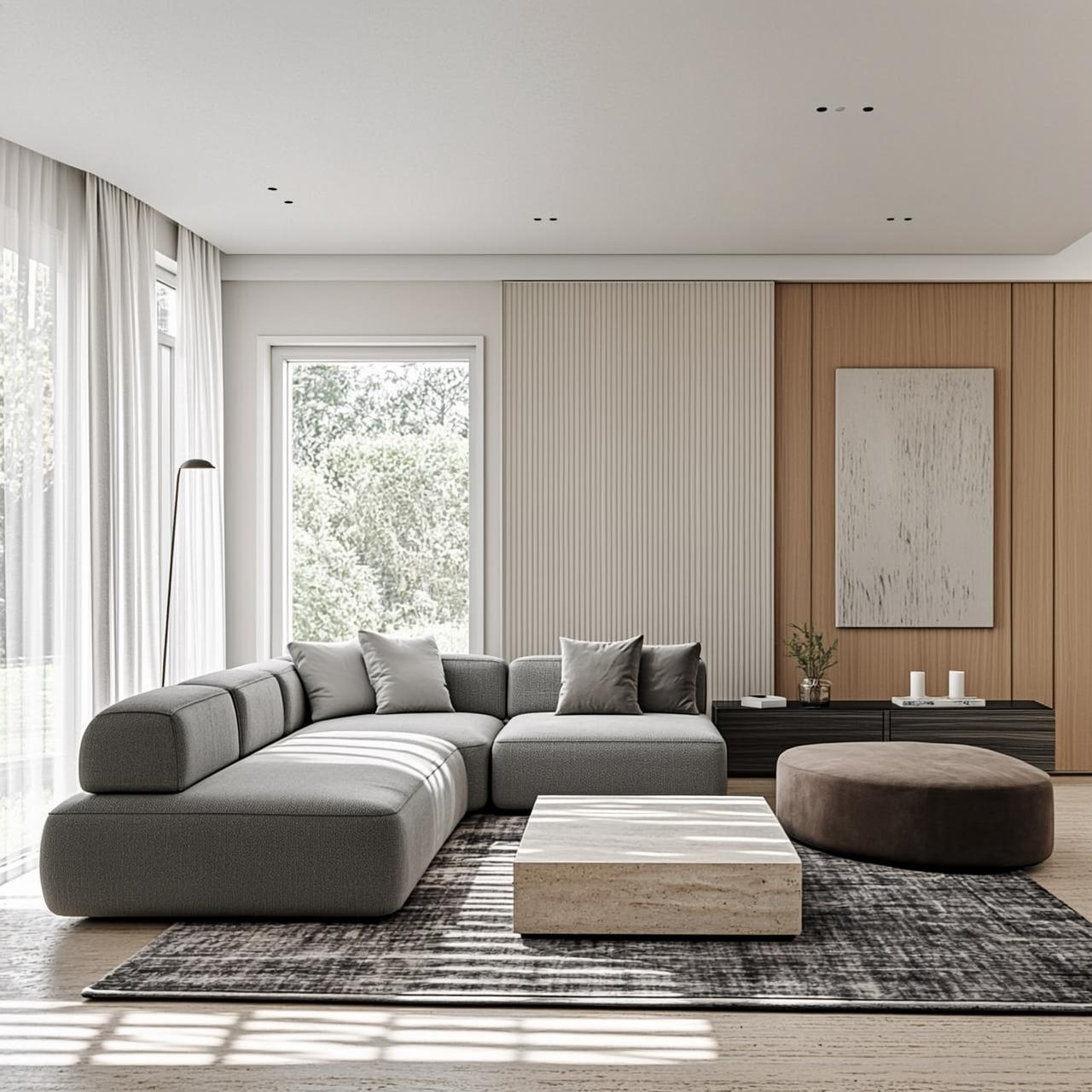
Creating a space that feels both current and timeless is the essence of modern living room design. It’s a style that celebrates simplicity, functionality, and intentionality, moving away from clutter and ornamentation to focus on what truly matters. But modern design is far from cold or sterile; when done right, it results in a living room that is serene, sophisticated, and deeply comfortable. It’s a space where clean lines and uncluttered surfaces create a calming backdrop for life’s moments, from quiet mornings with a cup of coffee to lively evenings with family and friends.
Achieving this aesthetic requires more than just buying the right furniture. It’s about understanding the philosophy behind modernism and applying its principles to create a cohesive, functional, and beautiful space. This comprehensive guide will walk you through the essential elements of modern living room design, from foundational concepts like color and materials to practical advice on furniture selection and layout. Whether you’re starting from scratch or looking to update your current space, these insights will help you create a modern living room that is both a stunning showcase and a beloved part of your home.
Table of Contents
Understanding Modern Living Room Design Philosophy
At its heart, modern design is a philosophy that emerged in the early to mid-20th century as a reaction against the ornate, traditional styles of the past. It’s built on the principle that “less is more,” valuing simplicity, clarity, and function over excessive decoration. This doesn’t mean a modern living room is empty or boring. Instead, every element is chosen with care and purpose, contributing to a harmonious and uncluttered whole.
The philosophy of modern design is about creating a space that supports your lifestyle without overwhelming the senses. It promotes a sense of calm and order, which can be a welcome sanctuary in our busy, cluttered world. Understanding this core idea—that every object should have a reason for being there—is the first step toward creating an authentic modern living room that feels both intentional and effortlessly stylish.
Beyond Trends: The Core Principles of Modernism
While trends come and go, the core principles of modernism remain constant. These include a focus on clean lines, asymmetrical balance, and a lack of fussy detail. Modern design celebrates the inherent beauty of materials rather than covering them up with ornamentation. You’ll see the natural grain of wood, the cool smoothness of metal, and the texture of fabric all playing a role in the design.
Another key principle is the connection between indoor and outdoor spaces. Large windows, sliding glass doors, and blurring the lines between inside and out are hallmarks of modern design. This creates a sense of expansiveness and brings nature into the home, contributing to the serene and grounded feeling that modern spaces are known for.
The Psychology of a Modern Space: Calm, Order, and Intention
There’s a reason modern spaces feel so calming. The uncluttered surfaces and simplified color palette reduce visual noise, allowing our minds to relax. The emphasis on order and intentionality creates a sense of control and tranquility. In a modern living room, everything has its place, which can reduce stress and promote a feeling of well-being.
This psychological benefit is one of the greatest strengths of modern design. It’s not just about creating a space that looks good in a magazine; it’s about creating an environment that feels good to live in. By surrounding ourselves only with things we love and need, we create a living room that is a true reflection of our values and a supportive backdrop for our lives.
Foundational Elements of Modern Design
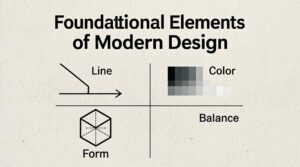
While the philosophy of modern design is about simplicity, executing it well requires careful attention to several key elements. These are the building blocks of a modern living room, and understanding how to use them effectively is crucial for success. From the color palette to the materials you choose, each decision contributes to the overall aesthetic and feel of the space.
These elements work together to create a cohesive look. The clean lines of the furniture are complemented by a simple color scheme, which is then enhanced by the thoughtful use of materials and textures. By mastering these foundational elements, you can create a modern living room that is both beautiful and deeply personal.
The Power of Clean Lines and Uncluttered Spaces
Clean lines are perhaps the most recognizable feature of modern design. This refers to the strong, simple lines found in the architecture and furniture of the room. Think sofas with sharp, geometric shapes, coffee tables with sleek, straight legs, and architectural elements like bare windows without heavy drapery. These lines create a sense of order and calm.
Uncluttered spaces are the natural result of this focus on clean lines. In a modern living room, surfaces are kept clear of unnecessary objects. Decor is used sparingly and intentionally, with each piece given room to breathe. This doesn’t mean the room is empty; rather, it’s curated to include only what is necessary and beautiful. The result is a space that feels open, airy, and serene.
Mastering the Neutral Color Palette with Strategic Pops of Color
Modern living rooms are known for their neutral color palettes. Whites, grays, beiges, and taupes create a bright, clean backdrop that makes the space feel larger and more open. This neutral foundation also provides a perfect canvas for other design elements to shine.
However, an all-neutral room can feel flat. The modern solution is to add strategic pops of color. This might be a bold accent wall in a deep blue or charcoal, a vibrant piece of abstract art, or colorful throw pillows on a neutral sofa. These pops of color add personality and visual interest without disrupting the overall sense of calm. The key is restraint—use color intentionally to highlight specific elements and create focal points.
Material Matters: Wood, Metal, Glass, and Textiles
In the absence of ornamentation, materials take center stage in modern design. The contrast between different materials adds visual interest and texture. You’ll often see a mix of warm and cool materials: the warmth of wood balanced by the coolness of metal and glass.
Light woods like maple, ash, and light oak are popular choices for modern furniture, as they maintain the light, airy feel. Metals like chrome, stainless steel, and blackened steel add a sleek, industrial edge. Glass is used for tables and shelving to create a sense of transparency and lightness. Textiles are used to add softness and texture—think a wool rug, a leather sofa, or linen curtains. The thoughtful combination of these materials is what gives a modern living room its character and depth.
Furniture Selection for a Modern Living Room
Furniture is the backbone of any living room, and in a modern space, the selection is particularly important. The right pieces will reinforce the clean lines and uncluttered aesthetic, while the wrong ones can make the space feel heavy and dated. When choosing furniture for a modern living room, focus on pieces with simple forms, raised legs, and a lack of excessive detail.
Scale and proportion are also crucial. In a modern living room, furniture should be appropriately sized for the space—neither too large and overwhelming nor too small and lost. Every piece should have enough room around it to breathe, contributing to the sense of openness and order.
Choosing the Perfect Sofa: Sectionals, Loveseats, and Modular Options
The sofa is typically the largest piece of furniture in the living room, setting the tone for the entire space. In a modern design, look for sofas with clean lines, low profiles, and raised legs. Avoid sofas with rolled arms, tufted backs, or skirted bases, as these details can look dated in a modern setting.
Sectionals can work well in larger modern living rooms, providing ample seating while maintaining a clean, unified look. For more flexibility, consider a modular sofa, which can be reconfigured to suit different needs. Loveseats and settees are great for smaller spaces or as complementary seating. Upholstery in solid, neutral colors like gray, beige, or white works best, allowing you to add color and pattern through pillows and throws.
Coffee Tables and Side Tables: Form Meets Function
In a modern living room, coffee and side tables should be as much about their sculptural form as their function. Look for tables with interesting geometric shapes and clean lines. Materials like glass, metal, and high-gloss lacquer are popular choices, as they reflect light and maintain a light visual weight.
A coffee table with a glass top and metal base can almost disappear into the room, making the space feel larger. Nesting tables are a great modern solution, providing multiple surfaces when needed but tucking away neatly when not in use. For side tables, consider C-tables that can slide over the arm of a sofa or simple cubes that can double as extra seating.
Accent Chairs: Adding Personality Without Clutter
Accent chairs are an opportunity to add personality and a touch of comfort to a modern living room. Look for chairs with interesting shapes or unique materials that can serve as sculptural elements in the room. A chair with a bold color or an unusual silhouette can become a focal point.
However, be selective. In a modern space, one or two well-chosen accent chairs are more effective than several smaller pieces. Look for chairs with clean lines and raised legs to maintain the uncluttered feel. Upholstery in a solid color or a subtle texture works best, saving bold patterns for smaller elements like pillows.
Layout and Space Planning in Modern Design
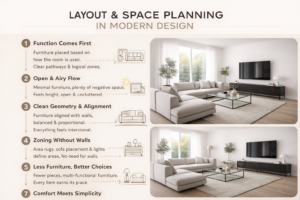
The layout of your furniture is just as important as the pieces themselves. In a modern living room, the goal is to create a layout that promotes easy conversation and clear pathways. The furniture arrangement should feel balanced and intentional, with a clear focal point and a natural flow.
Space planning in a modern room is about creating zones for different activities while maintaining an open, cohesive feel. This is especially important in open-concept homes, where the living room may flow into the dining area and kitchen. Thoughtful layout can define the living room space without using walls, creating distinct areas for lounging, entertaining, and other activities.
The Art of the Conversation Area
The primary function of most living rooms is to provide a comfortable space for conversation. In a modern design, this means arranging seating in a way that encourages interaction. A classic arrangement is a sofa facing two accent chairs, creating a U-shape that promotes easy conversation.
The key is to ensure that seats are close enough to facilitate conversation but not so close that the space feels cramped. Leave enough space for people to walk around the furniture comfortably. A coffee table in the center of the seating area helps to ground the space and provides a surface for drinks and books.
Balancing Symmetry and Asymmetry for Visual Interest
While symmetrical arrangements can feel formal and balanced, asymmetrical arrangements can add visual interest and a more casual, dynamic feel. In a modern living room, you can balance a large sofa on one side with two smaller chairs on the other, or balance a visually heavy piece of furniture with a lighter one on the opposite side.
The key to successful asymmetry is to create a sense of visual balance. This can be achieved through color, size, or the visual weight of the objects. Don’t be afraid to experiment with different arrangements until you find one that feels right for your space and your lifestyle.
Defining Zones in an Open-Concept Modern Living Room
In many modern homes, the living room is part of an open-concept space that includes the dining area and kitchen. To define the living room area without walls, use furniture placement and area rugs. A large area rug under the main seating group can visually anchor the living room space.
Furniture placement can also create boundaries. Placing a sofa with its back to the dining area can help separate the two spaces. A console table behind the sofa can further define the living room while providing a surface for decor and storage. Lighting can also be used to define zones, with a statement pendant or chandelier over the living room seating area.
Lighting: The Unsung Hero of Modern Spaces
Lighting is one of the most critical elements in modern living room design, yet it’s often overlooked. The right lighting can enhance the clean lines and uncluttered aesthetic of a modern space, while poor lighting can make even the most well-designed room feel flat and uninviting.
Modern lighting design is all about layers. A combination of ambient, task, and accent lighting creates a flexible and functional space that can adapt to different moods and activities. Natural light is also a key component, with modern design often maximizing windows and skylights to bring the outdoors in.
Harnessing Natural Light for an Airy Feel
Natural light is the best lighting for any space, and modern design makes the most of it. Large, unadorned windows are a hallmark of modern living rooms, allowing maximum light to enter the space. Skylights and clerestory windows can also be used to bring in light from above.
To maximize natural light, keep window treatments simple and minimal. Avoid heavy draperies that block light. Instead, opt for simple blinds, sheer curtains, or no window treatments at all if privacy isn’t a concern. Light-colored walls and surfaces will reflect natural light, making the room feel brighter and more open.
Layered Artificial Lighting: Ambient, Task, and Accent
Artificial lighting should be layered to create a warm, inviting atmosphere. Ambient lighting provides overall illumination and is usually provided by ceiling fixtures or recessed lights. Task lighting is focused lighting for specific activities like reading, provided by floor lamps or table lamps. Accent lighting highlights architectural features or artwork, using picture lights, uplights, or spotlights.
Dimmers are essential in a modern living room, allowing you to adjust the lighting to suit different moods and times of day. A well-lit modern living room will have multiple light sources that can be controlled independently, creating a flexible and adaptable space.
Selecting Modern Light Fixtures
The light fixtures themselves are an important part of the modern aesthetic. Look for fixtures with clean lines and simple forms. Sculptural pendants, sleek track lighting, and minimalist floor lamps all work well in a modern living room.
Materials like metal, glass, and matte black finishes are popular choices. Avoid fixtures with ornate details or traditional styling. The fixture should be a design element in its own right, complementing the clean lines of the furniture and architecture.
Decor and Accessories in a Modern Living Room
In a modern living room, less is more when it comes to decor and accessories. The goal is to add personality and visual interest without cluttering the space. This means choosing a few high-quality pieces that have a big impact rather than many small items.
Every decorative element should be chosen with intention. Ask yourself if it adds beauty, function, or meaning to the space. If not, it’s better left out. This curated approach to decor ensures that your modern living room feels calm and uncluttered, with each piece given the attention it deserves.
Wall Art and Mirrors: Creating a Focal Point
Wall art is a great way to add personality and color to a modern living room. A large piece of abstract art can create a stunning focal point above a sofa. If you prefer multiple pieces, create a gallery wall with a unifying theme, such as black and white photography or abstract prints in coordinating colors.
Mirrors are another excellent tool in modern design. A large mirror can make a room feel larger and brighter by reflecting light and views. A grouping of smaller mirrors can create an interesting focal point. When choosing mirrors, look for simple frames or frameless designs that complement the modern aesthetic.
Rugs and Textiles: Adding Warmth and Texture
While modern design emphasizes clean lines and hard surfaces, textiles are essential for adding warmth and texture. A large area rug can define the seating area and add a layer of softness underfoot. Look for rugs with simple geometric patterns or solid colors in natural fibers like wool or jute.
Throw pillows and blankets are another way to add texture and color. Choose pillows in solid colors or subtle patterns, and mix materials like velvet, linen, and wool. A chunky knit throw blanket draped over a sofa adds both texture and a sense of coziness, preventing the room from feeling too cold or sterile.
The Role of Plants and Natural Elements
Plants are a perfect addition to a modern living room. Their organic shapes and natural colors provide a beautiful contrast to the clean lines and neutral palette of modern design. A tall fiddle leaf fig or snake plant can add height and drama, while smaller succulents can add a touch of green to a shelf or table.
Natural elements like stone, wood, and water features can also enhance the modern aesthetic. A stone sculpture, a wooden bowl, or a small tabletop fountain can add a sense of nature and tranquility to the space. These elements connect the modern interior to the natural world, creating a more holistic and grounded feel.
Balancing Minimalism with Comfort
One of the biggest challenges in modern living room design is balancing the minimalist aesthetic with the need for comfort and livability. A space that is too stark or minimal can feel cold and uninviting, while too much comfort can lead to clutter. The key is to find a sweet spot where the space feels both clean and cozy.
This balance is achieved through the thoughtful selection of comfortable furniture, the use of soft textiles, and the inclusion of personal touches. The goal is to create a modern living room that you can actually live in—a space that is both beautiful and comfortable, a sanctuary for you and your family.
Avoiding the “Unlived-In” Look
The biggest pitfall of modern design is creating a space that looks more like a museum than a home. To avoid this, focus on livability. Choose a sofa that is not only stylish but also comfortable, with deep seats and soft cushions. Add plenty of pillows and throws to create a sense of coziness.
Incorporate personal elements like family photos, books, and meaningful objects. These personal touches will make the space feel lived-in and loved. Remember that modern design is about creating a home that supports your lifestyle, not about creating a perfect showcase.
Selecting Cozy Textiles and Comfortable Seating
Textiles are key to making a modern living room feel comfortable. Choose soft, inviting fabrics for upholstery, like velvet, chenille, or soft leather. Layer different textures to add depth and interest—a wool rug, linen curtains, and velvet pillows, for example.
Seating should be both stylish and comfortable. Look for sofas and chairs with deep seats and plush cushions. Don’t be afraid to prioritize comfort over strict adherence to style rules. A modern living room should be a place where you can relax and unwind, not just a space to look at.
What are the key elements of modern living room design?
How can I make my modern living room feel cozy?
What colors work best in a modern living room?
What type of furniture is best for a modern living room?
How do you layout furniture in a modern living room?
Can a modern living room have patterns?
Conclusion
Modern living room design is a beautiful blend of simplicity, functionality, and intentionality. It’s about creating a space that is calm, uncluttered, and serene, yet still warm, comfortable, and full of personality. By focusing on clean lines, a neutral color palette, and a thoughtful mix of materials, you can create a living room that is both timeless and of the moment.
Remember that modern design is not about rigid rules, but about guiding principles. The most successful modern living rooms are those that reflect the personality and lifestyle of the people who live in them. By following the guidelines in this guide and adapting them to your own taste and needs, you can create a modern living room that is not only beautiful and stylish but also a true sanctuary for you and your family.



![look what mom found: 12 Smart Office Finds [2026 Guide]](https://contractorswarehouse.org/wp-content/uploads/2026/03/2033836504639344640-300x167.jpg)
![lookwhatmomfound giveaways: 10 Builder Wins [2026 Guide]](https://contractorswarehouse.org/wp-content/uploads/2026/03/2033866803544854528-300x167.jpg)