
Introduction
The distinction between indoor comfort and outdoor living has become increasingly blurred in modern home design. Today, the patio and garden are viewed not merely as backyard appendages, but as extended living rooms—sanctuaries for relaxation and entertainment. Central to this evolution is the aesthetic and functional philosophy espoused by robert mygardenandpatio. This concept represents a dedicated approach to curating spaces that harmonize with nature while providing the sophistication and comfort expected of interior design. For the intermediate home decor enthusiast, understanding this approach is key to transforming a patch of grass into a personalized retreat.
Creating a cohesive outdoor environment requires more than placing a table and chairs on a deck. It involves a thoughtful consideration of materials, spatial flow, and durability against the elements. The guiding principles of robert mygardenandpatio emphasize the importance of selecting furniture that acts as a bridge between the ruggedness of the outdoors and the luxury of the indoors. Whether dealing with a sprawling garden or a compact urban balcony, the strategic selection of home decor furniture defines the utility and atmosphere of the space.
This comprehensive guide explores the depth of outdoor design strategy. We will examine the essential furniture categories, material sustainability, styling techniques, and maintenance protocols that define high-quality outdoor living. By delving into these topics, you will gain the expertise needed to elevate your exterior decor to a professional standard.
Table of Contents
- The Design Philosophy of robert mygardenandpatio
- Analyzing Materials for Longevity and Style
- Essential Furniture Categories for Outdoor Living
- Integrating Lighting and Accessories
- Spatial Planning and Layout Strategies
- Seasonal Maintenance and Care
- Sustainability in Outdoor Furniture
- Frequently Asked Questions
- Conclusion
The Design Philosophy of robert mygardenandpatio
The core of the robert mygardenandpatio approach lies in the seamless integration of landscape and hardscape. It posits that outdoor furniture should not stand apart from the garden but rather grow into it. This philosophy advocates for biophilic design principles, where the shapes, textures, and colors of the furniture reflect the natural surroundings. Instead of stark, industrial contrasts, the preference leans towards organic silhouettes and earth-toned palettes that age gracefully.
This design ethos also prioritizes “comfort-first” engineering. In the past, outdoor furniture was often stiff and weather-resistant at the expense of ergonomics. However, contemporary trends highlighted by industry leaders show a shift towards deep-seating arrangements, plush weather-proof cushions, and adjustable ergonomic designs. The goal is to replicate the living room experience under the open sky, encouraging longer usage times and deeper relaxation.
Transitional Style
A key identifier of this style is the “transitional” aesthetic. This blends the clean lines of modern design with the warmth of traditional elements. For instance, a sleek powder-coated aluminum frame might support a woven rattan backrest, or a minimalist teak table might be paired with plush, textured upholstery. This balance ensures that the furniture feels timeless rather than trendy, allowing it to remain stylish through changing seasons.
Analyzing Materials for Longevity and Style
The durability of outdoor furniture is the primary concern for any serious investor. Unlike indoor pieces, these items must withstand UV radiation, moisture, temperature fluctuations, and biological growth like mold. The robert mygardenandpatio selection criteria rigorously vet materials based on their performance-to-maintenance ratio.
Hardwoods: Teak and Eucalyptus
Teak has long been the gold standard for marine and outdoor applications. Its high oil content naturally repels water and insects. Over time, untreated teak develops a silver-grey patina that many designers prize for its rustic character. However, it requires periodic oiling if the original golden hue is desired. Eucalyptus offers a similar aesthetic and durability at a lower price point, though it is slightly less dense. Industry trends suggest that sustainably sourced hardwoods are seeing a resurgence as consumers prioritize eco-friendly investments.
Synthetics: Resin Wicker and Textilene
While natural rattan is beautiful, it degrades quickly outdoors. High-Density Polyethylene (HDPE) wicker, often referred to as resin wicker, is the modern solution. It is UV-resistant, impervious to water, and can mimic the texture of natural fibers. Similarly, Textilene is a PVC-coated polyester fabric used for sling chairs and sunbeds. It is cool to the touch, breathable, and incredibly easy to clean, making it a staple for poolside furniture.
| Material | Durability | Maintenance Level | Aesthetic Style |
|---|---|---|---|
| Grade A Teak | High (20+ Years) | Medium (Oiling optional) | Classic / Nautical |
| HDPE Wicker | High | Low (Hose down) | Coastal / Bohemian |
| Cast Aluminum | Very High | Low | Traditional / Modern |
| Stainless Steel | Medium-High | Medium (Rust check) | Contemporary |
Essential Furniture Categories for Outdoor Living
To create a fully functional exterior room, one must consider the distinct functional zones. The furniture selection should support dining, lounging, and quiet reflection. The robert mygardenandpatio collection categorizes these essentials into specific groups based on utility.
Dining Sets
The dining set is often the anchor of the patio. It facilitates social gatherings and family meals. When selecting a dining set, size is paramount. A common mistake is choosing a table that dominates the space, leaving no room for chairs to be pulled out comfortably. Rectangular tables suit long, narrow decks, while round tables are better for square footprints, encouraging conversation. Extendable tables offer versatility for hosting larger parties without permanently consuming space.
Deep Seating and Lounge Chairs
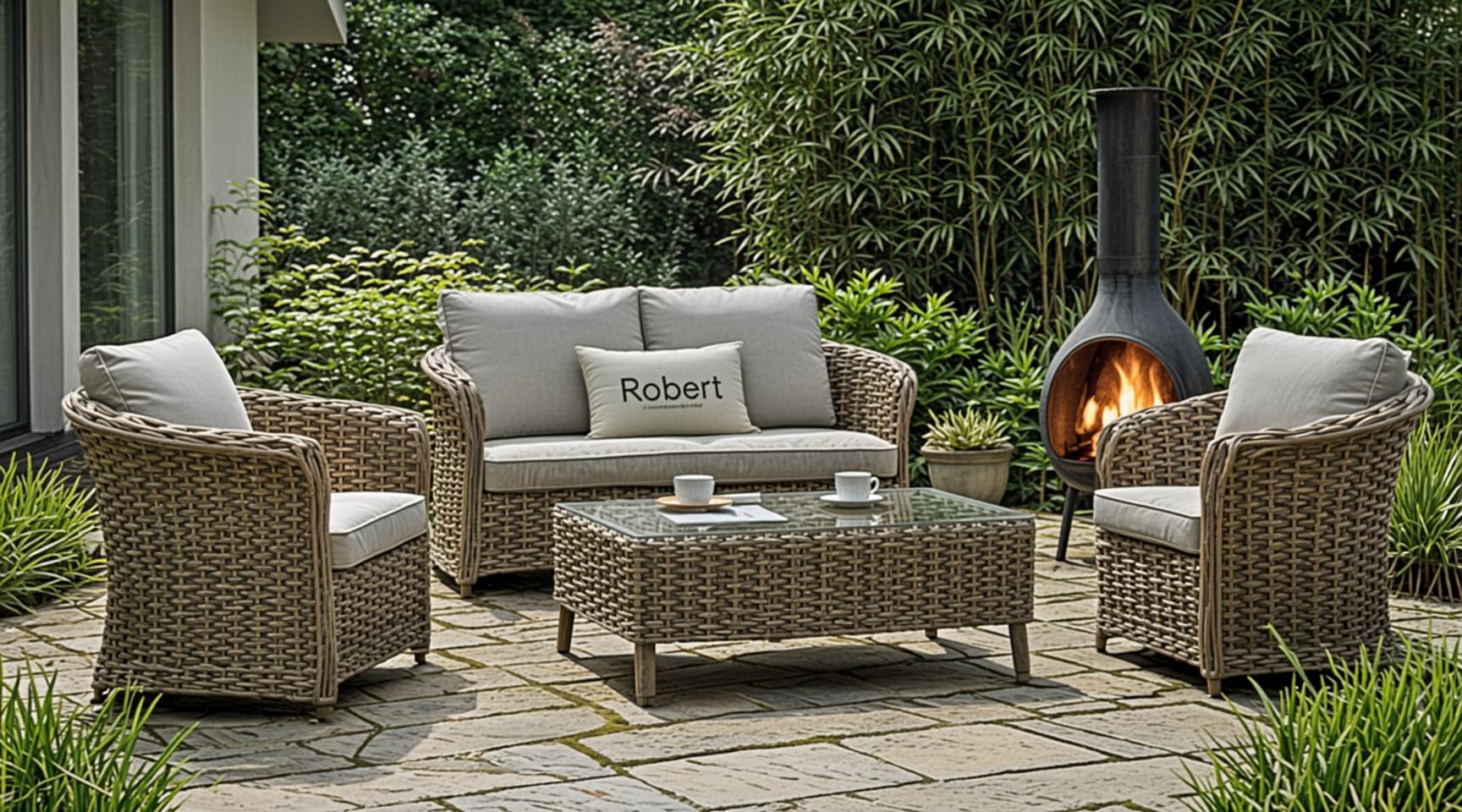
Moving beyond dining, the lounge area is where the “living room” concept comes to life. Deep seating sofas and club chairs require high-quality cushions. These cushions should utilize “quick-dry” foam inserts that allow water to drain through rather than trapping it, preventing mildew. Outdoor sectionals are particularly popular for their modularity, allowing homeowners to reconfigure the layout based on the occasion.
Accent Tables and Fire Pits
Side tables and coffee tables are the finishing touches. These surfaces are necessary for holding drinks, books, and decor items like lanterns. Recently, fire pit tables have become a central feature. They provide warmth, extending the usability of the patio into the cooler evening hours and shoulder seasons. Choosing a fire pit table with a cover allows it to double as a standard coffee table when the flame is not in use.
Integrating Lighting and Accessories
Furniture alone creates function, but accessories create atmosphere. The robert mygardenandpatio design strategy treats lighting as a critical layer of decor. Outdoor lighting should be multi-dimensional, combining overhead string lights or pergola-mounted fixtures with low-level landscape lighting and table lamps.
The Layered Lighting Technique
Ambient lighting, such as festoon lights or solar lanterns, sets a festive mood. Task lighting might be needed near a grill or kitchen area. Accent lighting, such as spotlights on architectural plants or water features, adds depth to the garden backdrop. The careful interplay of light and shadow transforms a flat patio into a dynamic night-time environment.
Textiles and Soft Furnishings
Outdoor rugs are an underutilized element that can define a seating area on a large deck. They bring warmth and color, softening the hard surface of stone or wood. Similarly, throw pillows should be rotated seasonally to refresh the look. Sunbrella fabrics are the industry standard here, offering fade resistance and mold resistance without sacrificing softness.
Spatial Planning and Layout Strategies
Effective design requires spatial intelligence. A cluttered patio feels smaller and less inviting than an empty one. The rules of interior design regarding traffic flow apply equally outdoors. There should be clear pathways (minimum 3 feet wide) for movement between zones.
Zoning the Garden
For larger gardens, distinct zones prevent the space from feeling like a furniture showroom. A dining zone might be located closer to the house for ease of service, while a lounge area might be positioned to capture the best view of the sunset. A quiet reading nook could be tucked away in a corner, surrounded by tall plants for privacy. Using planters and trellises as dividers is an excellent way to separate these zones without building walls.
Proportion and Scale
Scale is critical. A massive, heavy dining set will dwarf a small balcony, while delicate bistro furniture might look lost on a sprawling lawn. The visual weight of the furniture must be balanced against the expanse of the patio. Using transparent materials like glass tabletops or slim-line metal frames can help maintain a sense of openness in tighter spaces.
Seasonal Maintenance and Care
To protect the investment in high-quality furniture, a maintenance routine is non-negotiable. The longevity of these pieces is directly linked to the care they receive. The robert mygardenandpatio maintenance schedule adapts to the changing seasons.
Winterization
In climates with harsh winters, furniture must be properly stored or covered. Cushions should be stored in a dry, ventilated area to prevent mold. Wooden furniture may benefit from being moved to a sheltered area or covered with breathable, waterproof covers. Trapped moisture under non-breathable tarps is a common cause of damage, leading to mildew on cushions and rot on wood. Therefore, investing in high-quality, vented covers is essential.
Summer Care
During the peak season, regular cleaning is necessary. Bird droppings, tree sap, and pollen can stain surfaces if left unattended. A simple solution of mild soap and water is usually sufficient for most materials. For teak, a specialized cleaner can remove the grey patina if desired. It is also advisable to rotate cushions periodically to ensure even fading from the sun, although high-quality fabrics minimize this risk.
Sustainability in Outdoor Furniture
Modern consumers are increasingly conscious of the environmental impact of their purchases. The home decor furniture industry has responded with a range of sustainable options. Recycled plastic lumber, for example, mimics the look of painted wood but is made from post-consumer waste. It is virtually indestructible and recyclable at the end of its life.
FSC-certified wood ensures that the timber has been harvested in an environmentally responsible manner. The durability of the furniture also contributes to sustainability; buying a high-quality teak set that lasts 25 years is far more eco-friendly than replacing a cheap plastic set every two years. The “buy less, buy better” philosophy is central to the sustainable outdoor living movement.
Frequently Asked Questions
What is the most durable material for outdoor furniture?
Cast aluminum and Grade A teak are widely considered the most durable. Aluminum does not rust, and teak is naturally resistant to rot and insects. Both can last for decades with proper care.
How do I protect my outdoor cushions from rain?
While many outdoor cushions are water-resistant, it is best to store them during heavy rain or use furniture covers. Look for cushions with quick-dry foam cores to prevent waterlogging.
Can indoor furniture be used outdoors?
Generally, no. Indoor furniture is not designed to withstand UV rays or moisture. Doing so will lead to rapid deterioration, fabric fading, and potential structural damage. It is a false economy.
How should I arrange furniture on a small patio?
Focus on multi-functional pieces and vertical space. Use bistro sets or foldable chairs that can be stored away. Choose furniture with exposed legs to create a sense of visual space and lightness.
Does teak furniture need to be oiled?
No, it does not *need* to be oiled for preservation. Oiling is purely aesthetic to maintain the golden-brown color. If left unoiled, teak will weather to a silver-grey patina which acts as a natural protective layer.
What is the best way to clean resin wicker?
Resin wicker is very low maintenance. A mixture of mild dish soap and water applied with a soft brush is usually sufficient. Avoid high-pressure washers as they can damage the weave.
When is the best time to buy outdoor furniture?
The best deals are typically found in late summer or early autumn when retailers are clearing inventory for winter. However, selection is best in early spring.
Conclusion
The philosophy of robert mygardenandpatio extends beyond simple decoration; it is a commitment to enhancing the quality of life through thoughtful design. By treating the garden and patio as an extension of the home, we unlock valuable square footage for living, relaxing, and connecting with nature. The careful selection of durable materials, the strategic arrangement of furniture, and the integration of lighting and textiles work in concert to create a sanctuary that is both functional and beautiful.
Investing in quality home decor furniture for the outdoors is a decision that pays dividends in comfort and aesthetic value for years to come. As the lines between indoor and outdoor living continue to blur, the principles discussed here provide the roadmap for creating a space that is not only stylish but enduring. Whether you are refurbishing a heritage garden or styling a modern balcony, the key lies in balancing the rugged demands of nature with the refined desire for comfort.



![look what mom found: 12 Smart Office Finds [2026 Guide]](https://contractorswarehouse.org/wp-content/uploads/2026/03/2033836504639344640-300x167.jpg)
![lookwhatmomfound giveaways: 10 Builder Wins [2026 Guide]](https://contractorswarehouse.org/wp-content/uploads/2026/03/2033866803544854528-300x167.jpg)